
Effective Against Influenza

NAC and ALS
NAC and Flu
Lethal Drugs
In Every Home
Benefits
The Research
Dosage
Order
What You Don't
Know About NAC
Our Story
Who Shouldn't Take NAC
FAQ
Site Map

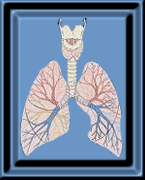
Our original focus was offering Effervescent N-Acetyl Cysteine (NAC) for people with lung issues, because it was so effective for our founder's own lung problems. He had scoured the internet to find help for himself and discovered hundreds of medical studies that convinced him to give NAC a try. His next task was to find the most effective form, which he did with the effervescent tablets. But in the course of that investigation, we found that it had powerful benefits for so much more.
The Problem With OTC N-Acetyl Cysteine
All over America, NAC is sold in health stores in pill or capsule form. The problem there, is that the manufacture and packaging is unregulated, since it is considered a nutraceutical, and not a drug. A study done at Stanford University has shown that N-Acetyl Cysteine will start to degrade and destabilize in the presence of air. If care isn't taken during manufacture to minimize the oxidation of NAC to its dimeric form, di-NAC, which even at low concentrations has the opposite effect of NAC, the content and purity is not reliable. Unfortunately, that kind of proper processing is much more costly and not required by law, so it's unlikely that those pills and capsules were produced at a higher standard. Then, they sit in warehouses and on shelves, so there's no way of knowing what potency, purity and efficacy you'll get. Often, because it dissolves slowly in your stomach, people report gastric discomfort.
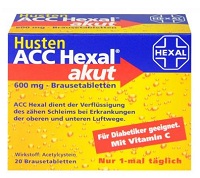
Effervescent NAC, shipped from Germany, is processed with very limited exposure to air, and then each wafer is individually sealed in airtight material. This is the most effective form outside of pharmaceutical injections. Dissolve a fizzy tablet in water, and it is quickly and completely absorbed, at full potency without the gastric issue or the risk of 'spoilage.'
When you're facing a serious health threat, like our founder was, you want the assurance that you're getting the best there is.
With the recent spread of influenza, enhancing your immune system with NAC is a proven protection. Many studies have shown its benefit against colds and bronchitis, but there is additional benefit against flu.
Here is a study published by the European Respiratory Journal that shows people taking NAC who are exposed to a flu virus have significantly reduced presentation of symptoms:
http://www.erj.ersjournals.com/cgi/content/abstract/10/7/1535
Attenuation of influenza-like symptomatology and improvement of cell-mediated immunity with long-term N-acetylcysteine treatment
S De Flora, C Grassi, and L Carati
N-acetylcysteine (NAC), an analogue and precursor of reduced glutathione, has been in clinical use for more than 30 yrs as a mucolytic drug. It has also been proposed for and/or used in the therapy and/or prevention of several respiratory diseases and of diseases involving an oxidative stress, in general. The objective of the present study was to evaluate the effect of long-term treatment with NAC on influenza and influenza-like episodes. A total of 262 subjects of both sexes (78% > or = 65 yrs, and 62% suffering from nonrespiratory chronic degenerative diseases) were enrolled in a randomized, double-blind trial involving 20 Italian Centres. They were randomized to receive either placebo or NAC tablets (600 mg) twice daily for 6 months. Patients suffering from chronic respiratory diseases were not eligible, to avoid possible confounding by an effect of NAC on respiratory symptoms. NAC treatment was well tolerated and resulted in a significant decrease in the frequency of influenza-like episodes, severity, and length of time confined to bed. Both local and systemic symptoms were sharply and significantly reduced in the NAC group. Frequency of seroconversion towards A/H1N1 Singapore 6/86 influenza virus was similar in the two groups, but only 25% of virus-infected subjects under NAC treatment developed a symptomatic form, versus 79% in the placebo group. Evaluation of cell-mediated immunity showed a progressive, significant shift from anergy to normoergy following NAC treatment. Administration of N-acetylcysteine during the winter, thus, appears to provide a significant attenuation of influenza and influenza-like episodes, especially in elderly high-risk individuals. N-acetylcysteine did not prevent A/H1N1 virus influenza infection but significantly reduced the incidence of clinically apparent disease.
http://www.erj.ersjournals.com/cgi/content/abstract/10/7/1535
proven way to enhance your immunity.
|
|

[Acetaminophen Poisoning] [Contact] [Our Story] [Order] [Shipping Info]
[Refund and Return Policy] [What You Don't Know About NAC]
[Site Map] [Privacy Policy] [FAQ]
We present you with public information for your own education about your options, which is not intended as a substitute for professional medical advice, diagnosis, or treatment. Always seek professional medical advice from your physician or other qualified healthcare provider with any questions you may have regarding a medical condition.